Florida Commercial Property Insurance Lawyers — When Your Business Insurance Won't Pay What Your Policy Promises
Helping Florida businesses recover unpaid insurance claims after property damage, denied coverage, and underpaid losses.
24+ years of insurance claim litigation experience
Commercial Condo Fire Settlement
Waterfront Restaurant Hurricane Settlement

Commercial Property Insurance — FLORIDA
Is Your Commercial Property Insurance Claim Missing the Full Scope of Your Damage?
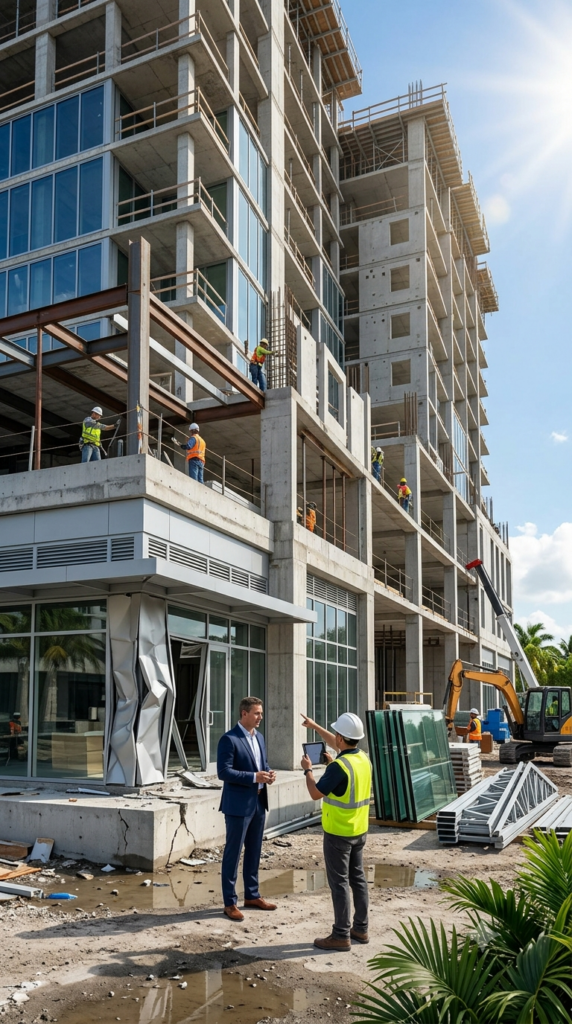
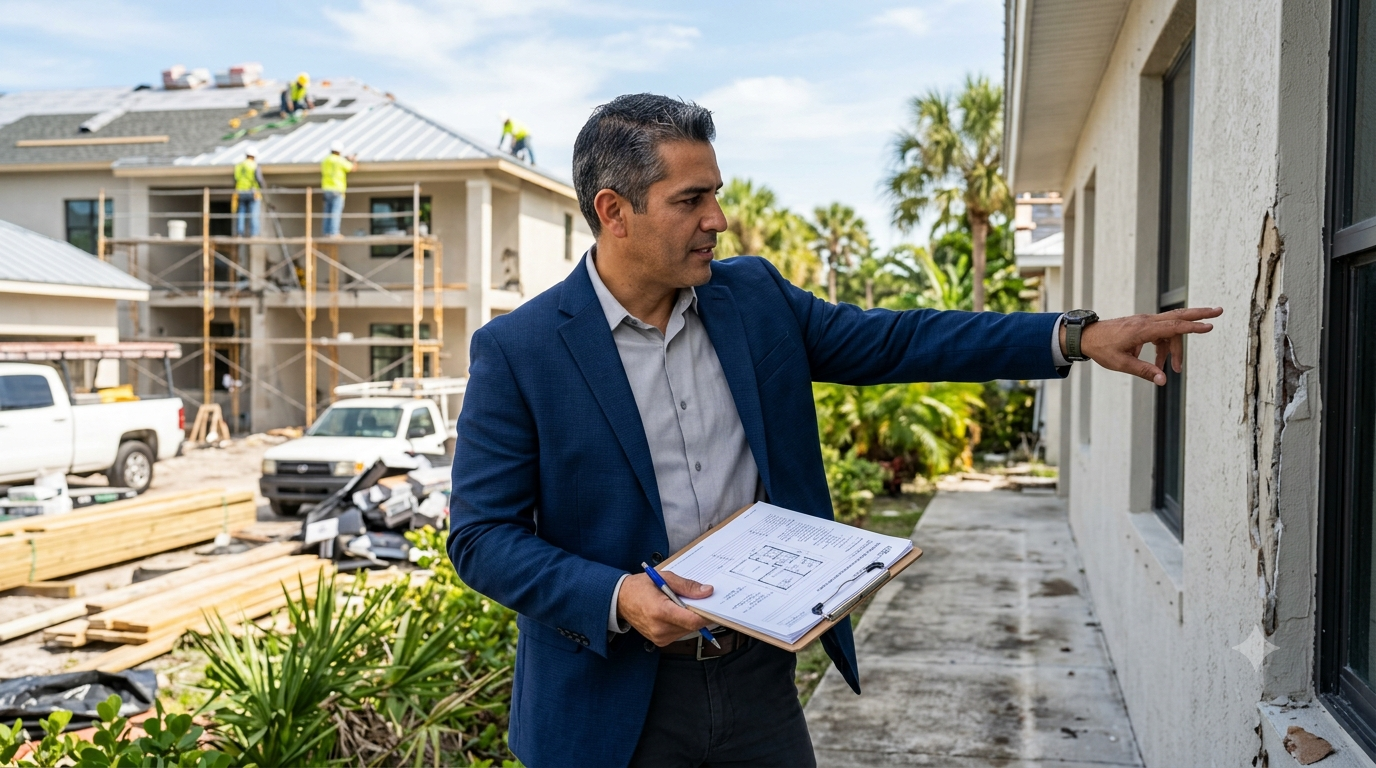
Commercial property damage often extends beyond what is immediately visible. Structural damage, hidden moisture, electrical issues, damaged equipment, inventory losses, and code upgrade requirements can significantly increase the true cost of recovery. Yet many insurance claims are evaluated based on a limited inspection or an incomplete assessment, leaving business owners with settlements that fail to cover the full extent of their covered losses.
Page reviewed and approved by Carlos D. Cabrera, Esq., Florida-licensed property damage attorney with 24 years of commercial insurance claim experience.
26+ Years Experience
$100M+ Recovered
Former Insurance Defense Attorneys
No Win, No Fee
Free Consultation
Florida Advocates represents commercial property owners, business owners, landlords, and property managers throughout Florida when insurance companies delay, deny, or underpay commercial property insurance claims. From office buildings and retail centers to restaurants and multi-family properties, we help businesses recover the full compensation their policies require.
Carlos D. Cabrera spent years defending insurance companies before representing the policyholders they undervalue. He knows exactly how commercial insurance adjusters are trained to evaluate claims — and how to build the evidence that overcomes those tactics.
Why Commercial Property Insurance Claims Are More Complex — And More Contested — Than Residential Claims
Florida Commercial Property Insurance Law — What Business Owners Need to Know
Florida Statute 627.70131 — Your Insurer's Obligations

Florida Statute 627.428 — Attorney's Fees
Florida Statute 624.155 — Bad Faith

Florida’s bad faith statute provides an additional avenue for recovery when an insurer fails to handle your commercial property claim in good faith — denying without adequate investigation, applying exclusions incorrectly, or delaying payment while your business suffers. A Civil Remedy Notice under this statute puts the insurer on formal legal notice and creates heightened exposure for continued non-payment. We evaluate bad faith in every commercial property dispute.
Commercial Property Insurance — What Your Policy Covers and Where Disputes Begin
The gaps in commercial property coverage are where disputes most commonly begin. Standard commercial policies do not automatically cover flood damage from external water sources — that requires a separate flood insurance policy. Earthquake damage requires a separate policy or endorsement. Pollution-related damage is typically excluded. Equipment breakdown has its own coverage form. And business interruption has its own waiting periods, restoration period definitions, and documentation requirements that operate independently of the property damage claim.
Co-insurance is one of the most misunderstood — and most financially devastating — provisions in commercial property policies. It requires you to carry coverage equal to a specified percentage of your property’s full replacement value — typically 80% or 90%. If your coverage falls short of that requirement at the time of a loss, the insurer applies a co-insurance penalty that proportionally reduces your settlement — even for partial losses.
How Florida Advocates Handles Your Commercial Property Claim
Free Claim Review
Full Policy Review
Independent Assessment
Co-Insurance and Valuation Analysis
Business Interruption Documentation
Claim Filing, Negotiation and Litigation
Types of Businesses We Represent in Business Interruption Claims
We represent commercial property owners and businesses across all property types throughout Florida:
Restaurants, bars, and food service operations
Retail stores, shopping centers, and strip malls
Office buildings and professional service suites
Hotels, motels, and short-term rental properties
Medical, dental, and healthcare facilities
Industrial facilities, warehouses, and distribution centers
Multi-family residential investment properties
Mixed-use commercial and residential developments
Churches, schools, and non-profit facilities
Any Florida business or commercial property owner with a commercial property insurance policy
Proven Results: Business Interruption Insurance Cases
Commercial Condo Fire Damage
Full recovery obtained for client following extensive fire damage to commercial condo unit.
Waterfront Restaurant Hurricane Claim
Insurer disputed full extent of hurricane damage. Independent assessment supported full policy limits.
Neighboring Property Liability
Restaurant Fire
Fire originated in neighboring restaurant due to faulty wiring. Neighboring insurer admitted liability.
Four Defendants
Commercial Property Claim
Complex multi-party claim. Liability established against COA and contractor after thorough investigation.
Restaurant Closure 18 Months
Business Interruption
Insurer denied under exclusion. Coverage found through policy endorsement.
Past results do not guarantee future outcomes. Every case is evaluated on its individual facts.
Florida Commercial Property Insurance — What You Need to Know
A standard commercial property insurance policy covers physical damage to your business’s real property — buildings, equipment, inventory, and fixtures. Covered perils typically include fire, windstorm, hurricane, hail, lightning, vandalism, and water damage from specified causes. Most policies also include some form of business interruption coverage for lost income during the period of restoration.
What commercial property insurance policies do NOT automatically cover often surprises business owners: flood damage from external sources requires separate flood insurance; earthquake damage requires a separate policy or endorsement; and pollution-related damage is often excluded. Understanding the gap between what you assumed was covered and what the policy actually covers is often where disputes begin.
Commercial property insurance claims involve higher stakes and more complexity than residential claims. Business owners face the combined pressure of physical damage, lost revenue, payroll obligations, and lease or mortgage obligations during the period when their property is unusable. Insurers know this — and some use the financial pressure to push for quick, undervalued settlements.
Commercial policies also involve more moving parts: co-insurance requirements that can dramatically reduce your recovery if coverage limits were inadequate, policy sublimits for specific perils, loss-of-rents endorsements with strict documentation requirements, and separate business interruption waiting periods that delay when coverage begins.
- Arguing that the cause of loss is excluded under the commercial policy
- Applying co-insurance penalties to reduce the settlement proportionally
- Disputing business interruption calculations and the period of restoration
- Claiming pre-existing conditions or deferred maintenance caused the damage
- Using preferred contractor estimates instead of market-rate repair costs
- Delaying claims until lease or mortgage defaults force a lower settlement
- Excluding code upgrade costs from the repair or replacement estimate
The moment you retain Florida Advocates, all communication with the insurance company goes through us. You will not be pressured into a quick settlement that undervalues your commercial claim.
Florida law imposes strict timelines on commercial insurance claim handling. Under Florida Statute 627.70131, your insurer must acknowledge your claim within 14 days, conduct a reasonable investigation, and pay or deny the claim within 90 days of receiving proof of loss. Failure to meet these obligations may constitute bad faith under Florida law, which can entitle you to additional damages beyond the value of your original claim.
Under Florida Statute 627.428, if you prevail in a lawsuit against your insurer, the court may award attorney’s fees against the insurance company. This provision is one of the most powerful tools available to commercial policyholders — it means that bringing a claim to court is often not the financial risk it appears. Our contingency fee arrangement means you pay nothing unless we recover for you, and when we prevail, the insurer may also be required to cover your legal costs.
Types of Commercial Property Claims We Handle
Hurricane and Windstorm Damage to Commercial Buildings
Commercial Fire and Smoke Damage Claims
Water Damage and Mold Remediation Claims
Roof Damage — Commercial Properties
Business Interruption and Loss of Income Claims
Equipment Breakdown and Mechanical Damage
Code upgrade claims — cost to bring damaged property up to current building standards
Vandalism and Malicious Mischief Claims
Commercial Claim Denials and Coverage Disputes
Bad Faith Insurance Claims — Commercial Policies
Loss of rents during the restoration period
About Attorney Carlos D. Cabrera
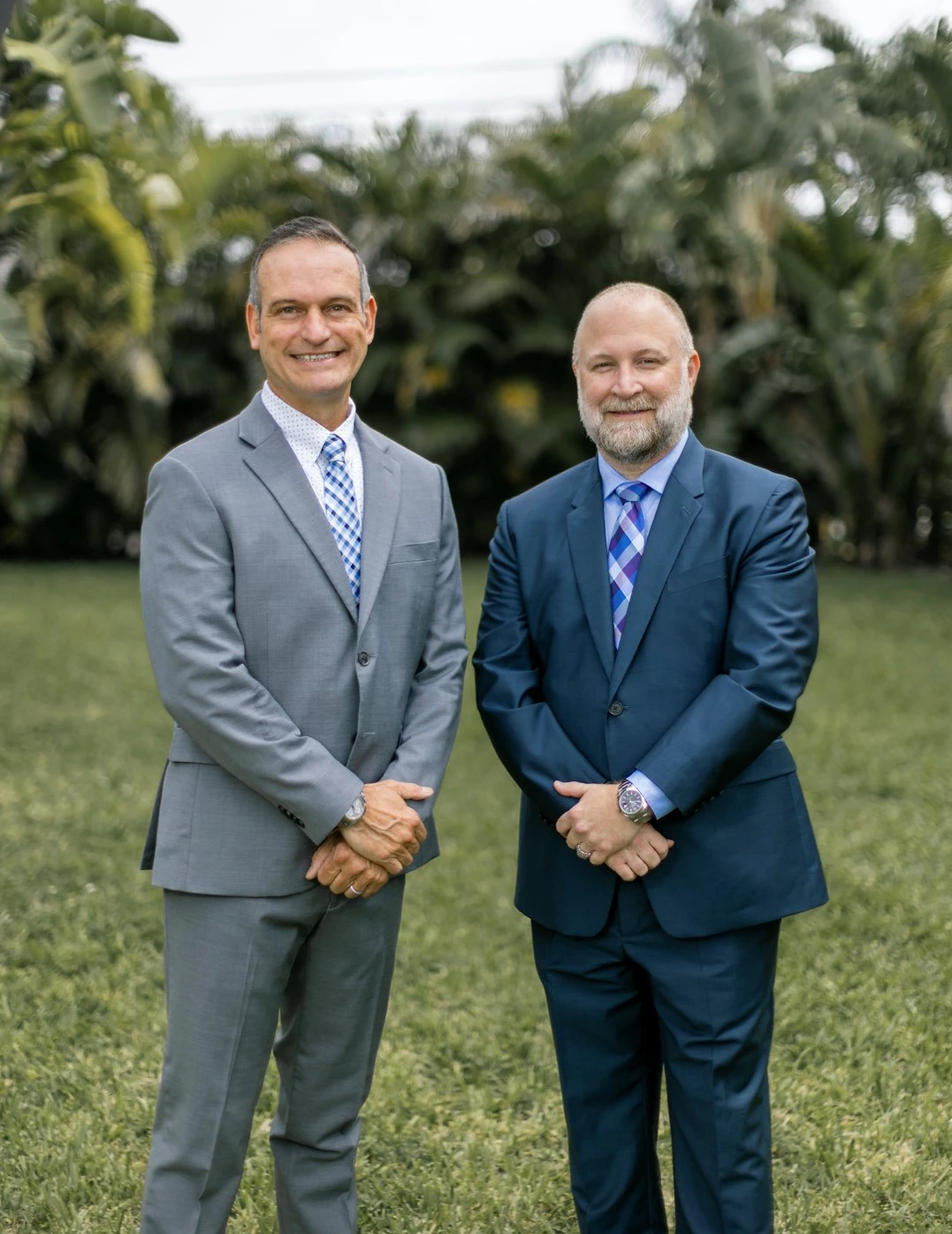
Carlos D. Cabrera, ESQ.
Carlos D. Cabrera oversees the Property Damage Department at Florida Advocates. Before becoming a plaintiff’s attorney, Carlos worked defending insurance companies and gained firsthand knowledge of how insurers evaluate, delay, and undervalue property damage claims. He uses that inside knowledge to build cases that insurance companies take seriously — from initial claim through trial.
Carlos has recovered millions of dollars for Florida homeowners, condo owners, and businesses whose property damage insurance claims were denied, delayed, or underpaid. His background gives clients a distinct advantage: he has sat on the other side of the table, and he knows what insurers are looking for — and what they are hoping you will miss.
Education:
- J.D. — University of Florida College of Law
- Admitted to the Florida Bar
Court Admissions:
- Florida
- U.S. District Court, Southern District of Florida
- U.S. District Court, Middle District of Florida
- U.S. District Court, Northern District of Florida
Awards & Recognition:
- Million Dollar Advocates Forum — Member (reserved for attorneys who have won $1M+ settlements or verdicts)
- Multi-Million Dollar Advocates Forum — Member
- Florida Legal Elite Recognition
- Bilingual — English and Spanish
Professional Memberships:
- Broward County Bar Association
- Florida Bar
All results on this page were obtained under the supervision of Florida Advocates property damage attorneys. Carlos D. Cabrera, Esq. — serves as the firm’s lead property damage attorney and has personally supervised the majority of the cases reflected in these results.
What to Do After Your Commercial Property Claim Is Denied or Underpaid
If your insurer has denied or undervalued your commercial property claim:
Do:
- Preserve all documentation — photos, contractor estimates, financial records, correspondence with your insurer
- Note all deadlines in your policy — timelines for supplemental claims and dispute procedures vary
- Contact Florida Advocates for a free review of your commercial claim
Do NOT:
- Do NOT authorize repairs that would destroy evidence of the original damage before it is properly documented
- Do NOT sign any release or accept any settlement without legal review
- Do NOT accept the insurer’s assessment as final — a denial or low offer is the start of a negotiation, not the end
- Accept the insurer’s estimate as the final word on repair costs — independent contractor bids almost always produce higher and more accurate figures
- Accept a business interruption calculation without forensic accounting review — insurer calculations routinely understate income losses
- Sign any release or accept any payment on a commercial claim without legal review — partial payments on commercial claims do not always close the claim, but releases can
- Give a recorded statement to any commercial insurance adjuster without legal advice
- Allow financial pressure from lease or mortgage obligations to force you into a premature settlement — contact us first
- Assume the co-insurance penalty the insurer applied is correctly calculated
Frequently Asked Questions — Florida Commercial Property Insurance

Carlos D. Cabrera, ESQ.
Florida Advocates,
My commercial property insurance claim was denied. What are my options?
A denial from your commercial insurer is not final. Your options include filing a supplemental claim with additional documentation, invoking the appraisal process under your policy to dispute the valuation, filing a Civil Remedy Notice to put the insurer on notice of bad faith, and filing a lawsuit. The right approach depends on the reason for the denial and your policy’s dispute resolution provisions. We review denied commercial claims at no cost — contact us before accepting any denial as final.
How long do I have to file a commercial insurance claim in Florida?
Florida’s deadlines vary by policy type and the specific circumstances of your claim. Under HB 837 (2023), the statute of limitations for most property insurance claims was reduced to 2 years from the date of the loss. Supplemental claims on existing open claims may have an 18-month window. Your policy may also impose separate reporting requirements. Do not wait — contact us immediately after your loss or denial.
Can I recover business interruption losses if my property was damaged?
Yes, if your commercial property policy includes business interruption coverage. This coverage typically pays for lost net income during the ‘period of restoration’ — the time needed to repair or rebuild your property. Coverage usually begins after a waiting period and has its own documentation requirements. Many business interruption disputes center on the calculation of lost income and the length of the restoration period. We handle these disputes regularly.
What is a co-insurance penalty and how does it affect my commercial claim?
Co-insurance is a policy provision requiring that you carry coverage equal to a specified percentage — typically 80% or 90% — of your property’s full replacement value. If your coverage falls short of this requirement, your insurer can apply a co-insurance penalty that proportionally reduces your claim payout, even for partial losses. This is one of the most commonly misunderstood provisions in commercial property policies and one that insurers use to significantly reduce settlements. If a co-insurance penalty has been applied to your claim, we can evaluate whether it was properly calculated.
My insurer says the damage was caused by a lack of maintenance, not a covered peril. What can I do?
Insurers frequently argue that damage resulted from neglected maintenance rather than a covered peril — particularly for roof claims, water intrusion, and mechanical failures. This exclusion is often applied too broadly. An independent engineering assessment can document the actual cause of damage and distinguish between maintenance issues and covered event damage. We work with independent engineers and contractors to build this evidence and challenge improper exclusion arguments.
What if my commercial property insurer is delaying my claim?
Under Florida Statute 627.70131, your insurer has specific obligations to acknowledge your claim within 14 days and make a coverage determination within 90 days. Unexplained delays beyond these timeframes may constitute bad faith insurance practices. Florida’s bad faith insurance laws allow policyholders to pursue additional damages against insurers who fail to handle claims in good faith. Document every communication with your insurer with dates and contact names, and contact us if your claim is being unreasonably delayed.
How much does it cost to hire Florida Advocates for a commercial property claim?
Nothing unless we recover for you. We work on a contingency fee basis and advance all costs including expert witnesses, engineering reports, and litigation costs. Your initial consultation is free and confidential. Under Florida law, if we prevail in litigation, the court may also order your insurer to pay your attorney’s fees — meaning our legal representation may ultimately cost you nothing at all.
Damages Available in Commercial Property Insurance Disputes
Policy Benefits
- Full repair or replacement cost of damaged property
- Business interruption — lost net income during restoration
- Extra expense coverage for costs above normal operations
- Code upgrade costs required by current building standards
- Loss of rents during property restoration
Additional Damages
- Attorney’s fees under Florida Statute 627.428
- Bad faith damages for improper claim handling under Florida Statute 624.155
- Pre-judgment interest on delayed payments
No Fee Unless We Win
We work on a contingency fee basis:
- Free consultation — no cost to speak with us
- No upfront fees — we advance all case costs
- No attorney fees unless we recover for you
- You will never receive a bill from us while your case is active
Florida Advocates Office Locations
Dania Beach (Headquarters)
45 E Sheridan Street, Dania Beach, FL 33004
North Miami
13499 Biscayne Blvd #107, North Miami, FL 33181
Tampa
238 E Davis Blvd #210, Tampa, FL 33606
Phone: 754-263-4252
Hours: Monday – Friday 9:00 AM – 5:00 PM
Available by phone 24/7 for emergencies
Commercial Property Insurance Lawyers by Location
We represent commercial property owners and businesses throughout Florida:
Broward County
- Fort Lauderdale
- Dania Beach
- Hollywood
- Broward County
Miami-Dade County
- Miami
- North Miami
- Miami Beach
- Hialeah
Palm Beach County
- West Palm Beach
- Boca Raton
- Palm Beach County
Tampa Bay Area
- Tampa
- St. Petersburg
- Hillsborough County
Northeast Florida
- Jacksonville
- Duval County
Treasure Coast
- Port St. Lucie
- Fort Pierce
- Martin County
Orlando / Central Florida
- Orlando
- Orange County
- Seminole County
Southwest Florida
- Fort Myers
- Naples
- Cape Coral
- Lee County