Florida HOA and COA Property Damage Lawyers — When Your Association Won't Cover the Damage to Your Home
Helping Florida homeowners recover compensation when homeowners associations (HOAs) and condominium associations (COAs) wrongfully deny, delay, or underpay property damage claims.
24+ years of insurance claim litigation experience
COA Liability Settlement
Water Damage Settlement

HOA and COA Property Damage Lawyers — FLORIDA
Is Your HOA or COA Property Damage Claim Missing the Full Scope of Your Losses?
Property damage affecting homeowners' associations (HOAs) and condominium owners' associations (COAs) often extends far beyond the obvious. Damage to roofs, building exteriors, common areas, structural components, mechanical systems, and shared facilities can lead to additional repair costs, safety concerns, and disruptions for residents. Yet many insurance claims are evaluated using limited inspections or incomplete damage assessments, leaving associations with settlements that fall short of the true cost of restoring the property and protecting the community.
Page reviewed and approved by Carlos D. Cabrera, Esq., Florida-licensed property damage attorney with 24 years of HOA, COA, and condominium property damage claim experience.
26+ Years Experience
$100M+ Recovered
Former Insurance Defense Attorneys
No Win, No Fee
Free Consultation
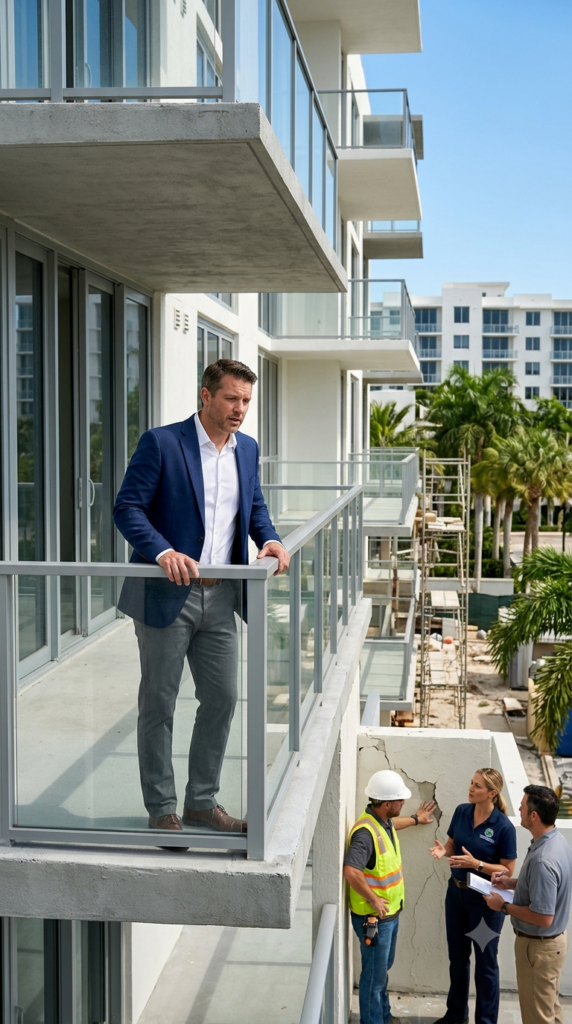
When water leaks from a common area roof into your unit, when the association’s contractor floods your home during a repair, when a shared pool overflows into the unit below — the question of who is responsible, and whose insurance should pay, becomes the center of a dispute that associations and their insurers are well-prepared to contest. Most unit owners are not.
Florida Advocates represents condominium owners, townhome owners, and homeowners throughout Florida who suffered property damage caused by an HOA or COA’s failure to maintain common areas, failure to carry proper insurance, failure to oversee contractors, or refusal to acknowledge their responsibility for damage to your unit. We know the Florida Condominium Act, the HOA Act, and how associations structure their defenses — and we know how to overcome them.
Why HOA and COA Property Damage Disputes Are Uniquely Difficult
The Legal Framework — Florida Statutes That Govern Your Rights
Florida Condominium Act — Chapter 718

Florida Homeowners Association Act — Chapter 720
The Boundary Between Common Elements and Unit Owner Property

The Association's Insurance vs Your Unit Owner Policy — What Each Covers
One of the most important questions in every HOA and COA property damage case is which insurance policy responds — and in what sequence. The answer is almost never as simple as the association tells you.
Florida’s Condominium Act requires associations to maintain property insurance on the condominium property. This master policy typically covers the common elements and, in most communities, the original fixtures, flooring, and finishes in individual units — called “bare walls in” or “all in” coverage depending on the policy. When damage to your unit is caused by a common element failure, the association’s master policy is often the primary source of coverage.
How We Establish the Association's Responsibility
Building the case for an HOA or COA property damage claim requires specific evidence that we develop systematically:
How Florida Advocates Handles Your HOA or COA Property Damage Case
Free Case Review
Independent Damage Assessment
Written Notice to the Association
Insurance Claims Filed
Negotiation
Litigation and Bad Faith
Proven Results: Business Interruption Insurance Cases
Contractor Liability, 4 Defendants
Commercial COA
COA found liable alongside contractor for negligent contractor selection and supervision.
Water Damage from Common Area
COA
Insurer offered $17,000. Proved damage was caused by common area failure. Full recovery obtained.
Pool Overflow from Negligent Maintenance
COA
COA liable for hiring unqualified pool cleaning contractor whose improper work caused flooding to units below.
Flooding During Common Area Roof Replacement
COA
COA held responsible for negligently hiring the contractor who flooded the unit during roof work.
Water and Mold Damage from Common Area
HOA
HOA initially offered $14,000. Independent engineer documented full extent of damage. Full settlement obtained.
Past results do not guarantee future outcomes. Every case is evaluated on its individual facts.
Florida HOA and COA Property Damage Law — What You Need to Know
The Florida Condominium Act (Chapter 718) governs condominiums and COAs in Florida. It establishes the association’s obligations regarding insurance, maintenance of common elements, and responsibility for damage to individual units caused by common element failures. Under Florida Statute 718.111(11), the association is required to maintain insurance on the condominium property — which in most cases includes coverage for damage to units caused by common element failures.
Understanding the boundary between what the COA is responsible for and what falls to the unit owner is the first and most important step in a condo property damage dispute. This boundary is defined by the condominium’s Declaration of Condominium, its insurance obligations under the statute, and the specific cause of the damage. COAs regularly take the position that damage falls outside their responsibility — often incorrectly.
The Florida Homeowners Association Act (Chapter 720) governs HOAs in single-family home communities and townhome developments. HOAs have different insurance and maintenance obligations than COAs — the scope depends significantly on the community’s Declaration of Covenants, Conditions and Restrictions (CC&Rs). When an HOA’s failure to maintain common areas — stormwater drainage, shared fencing, common area trees, shared walls — causes damage to your property, the HOA may be directly liable.
One of the most contested issues in HOA and COA property damage cases is where the association’s responsibility ends and the unit owner’s begins. For condominiums, the boundary is typically defined by the Declaration of Condominium and may be described as ‘from the paint inward’ — meaning the association insures and is responsible for the structure and common elements up to the interior surface of the unit walls, floor, and ceiling.
In practice, this boundary is frequently disputed. Associations argue that the damage originated within the unit rather than from the common elements. Insurers for the association and insurers for the unit owner both have financial incentives to shift responsibility to the other party. We have extensive experience establishing the actual source of damage and holding the responsible party — whether that is the COA, the HOA, an adjacent unit owner, or a combination — accountable.
Under Florida law, COAs are required to maintain property insurance for the condominium property as a whole. This coverage typically includes damage to individual units caused by common element failures. If your COA’s insurer is denying your claim — or the COA itself is claiming the damage is your responsibility — we evaluate both the association’s coverage obligations under the statute and the specific circumstances of your damage.
Common Sources of HOA and COA Property Damage
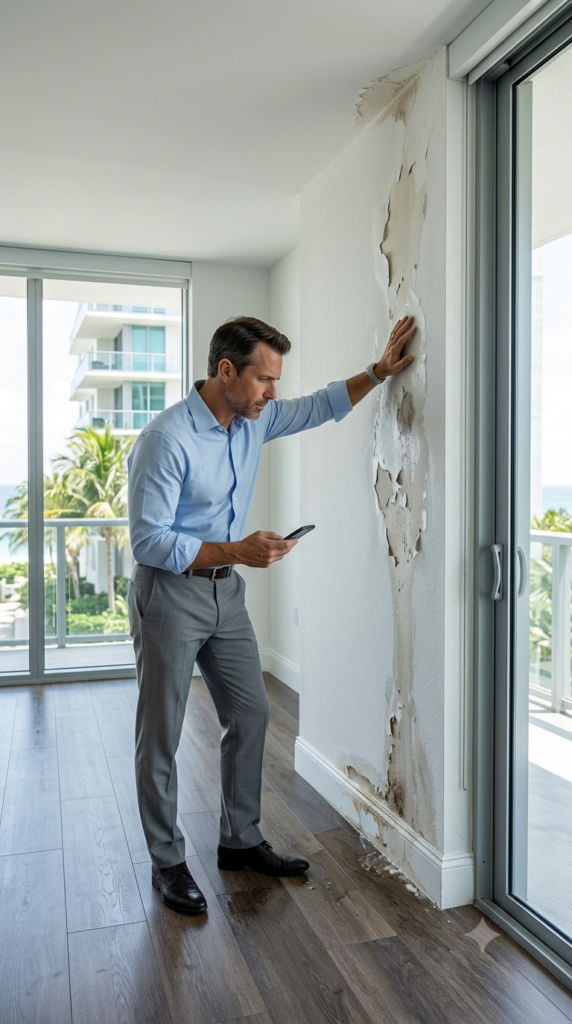
Water intrusion from common area roof, plumbing, or HVAC into individual units
Flooding caused by association's contractor during common area repairs
Pool, spa, or water feature overflow into units or yards
Mold resulting from association's failure to address water intrusion
Structural damage caused by common element failure
Tree falls from association-maintained trees onto unit property
Stormwater drainage failure causing property flooding
Fire originating in common areas damaging individual units
HOA or COA insurance disputes — association claiming damage is unit owner's responsibility
Association bad faith in handling or delaying damage claims
The roof above a condominium building or a common area roof that covers multiple units is a common element — meaning the association is responsible for its maintenance and insurance. When water enters your unit through a failing roof, missing flashing, or inadequate roof drainage, the question is not simply whether your ceiling is wet. The question is whether the water intrusion originated from a common element. If it did, the association’s obligations — and their insurer’s obligations — are triggered.
The roof above a condominium building or a common area roof that covers multiple units is a common element — meaning the association is responsible for its maintenance and insurance. When water enters your unit through a failing roof, missing flashing, or inadequate roof drainage, the question is not simply whether your ceiling is wet. The question is whether the water intrusion originated from a common element. If it did, the association’s obligations — and their insurer’s obligations — are triggered.
Associations frequently argue that roof leaks are the result of long-term wear rather than a sudden failure, attempting to reclassify covered damage as a maintenance issue. An independent roofing engineer can document the specific cause and timing of the failure and rebut these arguments.
In multi-unit buildings, plumbing running through walls and floors may serve multiple units — making it a common element under the Florida Condominium Act regardless of where it is physically located relative to your unit boundaries. When a pipe in a shared wall or floor fails and water damages your unit, the association may be responsible for the pipe — even if the water first became visible inside your unit.
The distinction between “your plumbing” and “the association’s plumbing” is frequently disputed and often misrepresented to unit owners. We review the Declaration and the applicable statute to establish exactly where the association’s responsibility begins and ends.
When an association hires a contractor to perform work on common elements — reroofing the building, replacing shared plumbing, servicing the pool system, painting the exterior — and that contractor’s work damages your unit, the association may be directly liable. Florida law imposes on associations an obligation to hire qualified, licensed, and insured contractors. When an association fails to verify licensure, fails to obtain proof of insurance, or fails to adequately supervise the contractor’s work, the association itself bears responsibility for the contractor’s negligence — in addition to the contractor.
Central HVAC systems, cooling tower systems, and shared mechanical equipment in multi-unit buildings are common elements in most condominium communities. When these systems fail and cause water damage — condensate overflow, refrigerant line failure, chiller leaks — the association’s maintenance obligations and their insurer’s obligations are typically triggered.
Elevator hydraulic leaks, generator fuel spills, boiler system failures, and other building infrastructure failures in common areas can cause significant damage to individual units. These are common element failures squarely within the association’s maintenance and insurance obligations.
Water intrusion from parking decks and garages into units below is a particularly common issue in South Florida’s high-rise condominium communities. Failing waterproofing membranes on parking decks — which are common elements — allow water to penetrate into residential floors below. These claims often involve significant remediation costs and extended disputes about whether the parking structure membrane is the association’s responsibility.
About Attorney Carlos D. Cabrera

Carlos D. Cabrera, ESQ.
Carlos D. Cabrera oversees the Property Damage Department at Florida Advocates. Before becoming a plaintiff’s attorney, Carlos worked defending insurance companies and gained firsthand knowledge of how insurers evaluate, delay, and undervalue property damage claims. He uses that inside knowledge to build cases that insurance companies take seriously — from initial claim through trial.
Carlos has recovered millions of dollars for Florida homeowners, condo owners, and businesses whose property damage insurance claims were denied, delayed, or underpaid. His background gives clients a distinct advantage: he has sat on the other side of the table, and he knows what insurers are looking for — and what they are hoping you will miss.
Education:
- J.D. — University of Florida College of Law
- Admitted to the Florida Bar
Court Admissions:
- Florida
- U.S. District Court, Southern District of Florida
- U.S. District Court, Middle District of Florida
- U.S. District Court, Northern District of Florida
Awards & Recognition:
- Million Dollar Advocates Forum — Member (reserved for attorneys who have won $1M+ settlements or verdicts)
- Multi-Million Dollar Advocates Forum — Member
- Florida Legal Elite Recognition
- Bilingual — English and Spanish
Professional Memberships:
- Broward County Bar Association
- Florida Bar
What to Do When Your HOA or COA Refuses to Cover Your Damage
IMPORTANT
Before you accept the association's position that the damage is your responsibility, contact us. Associations have experienced legal counsel advising them on minimizing their exposure. You should have the same.
Do:
- Document all damage with photographs and video before any repairs
- Preserve all correspondence with the association — emails, letters, meeting minutes
- Request a copy of the association’s Declaration and current insurance policies
- File claims with both your unit owner’s insurer and the association’s insurer
- Obtain your own independent estimate of the repair cost
- Contact Florida Advocates for a free review of the association’s responsibilities
Do NOT:
- Do NOT sign any release or accept any settlement from the association without legal review
- Do NOT give recorded statements to the association’s insurer without legal advice
- Do NOT accept the association’s verbal statement that the damage is your responsibility without getting that position in writing and having it reviewed by an attorney
- Do NOT file only with your own HO-6 insurer and assume the association’s coverage is unavailable — their master policy may be required to respond
- Do NOT give recorded statements to the association’s insurer — they represent the association, not you
- Do NOT sign any release, indemnity agreement, or repair authorisation from the association without legal review
- Do NOT allow the association to perform repairs without first documenting the damage independently — association repairs are sometimes inadequate and can eliminate evidence of the original source
- Do NOT miss the association’s internal dispute process deadlines — some communities have governing document procedures that must be followed before legal action
Frequently Asked Questions — Florida HOA and COA Property Damage

Carlos D. Cabrera, ESQ.
Florida Advocates,
My condo association says the water damage to my unit is my responsibility because it started inside my unit. What are my rights?
This is the most common position COAs take to avoid responsibility, and it is frequently incorrect. Under the Florida Condominium Act and your Declaration of Condominium, the association is responsible for common elements — including plumbing within the walls, the roof above your unit, and shared building systems. If water originated from a common element — even if it first became visible inside your unit — the association may be responsible. An independent plumber or engineer can trace the source of the water and establish the origin point. We handle these source-of-loss disputes regularly.
The association hired a contractor who flooded my unit during a repair job. Who is responsible?
Potentially both the contractor and the COA or HOA. If the association hired the contractor and failed to verify their licensure or insurance, or failed to adequately supervise the work, the association may be directly liable for the contractor’s negligence — even if they did not perform the work themselves. Three of our case results involve exactly this scenario. We pursue both the contractor and the association to maximize your recovery.
My HOA is delaying my damage claim. What can I do?
HOAs and COAs, like insurance companies, have legal obligations to respond to claims in a reasonable timeframe. Unreasonable delay in addressing property damage — particularly when the association knows about the damage and fails to act — can constitute a breach of the association’s duties and may give rise to bad faith claims. Document every communication with dates and follow up in writing. Contact us if the association’s delay is causing your damage to worsen.
The association offered to repair the damage itself. Should I agree?
Not without legal advice. Associations have a financial incentive to repair damage as cheaply as possible, which does not always align with proper remediation. Association repairs that are inadequate can lead to recurring damage, mold growth, and long-term structural problems. Before you agree to any repair by the association, have an independent contractor inspect the damage and verify that the proposed repairs are adequate. We can also review any agreement the association asks you to sign.
My HOA says my homeowner's insurance should cover the damage, not the HOA. Is that right?
Sometimes — but often not entirely. The answer depends on the source of the damage. If the damage originated from a common area maintained by the HOA, the HOA’s coverage obligations under the governing documents and Florida law are triggered. Your homeowner’s insurer can pay your claim and then seek reimbursement from the HOA or its insurer through subrogation. In practice, both insurers try to push responsibility to the other party. We navigate this coverage battle on your behalf.
What is the difference between a COA and HOA case?
COAs govern condominium communities under the Florida Condominium Act (Chapter 718). HOAs govern single-family and townhome communities under the Florida Homeowners Association Act (Chapter 720). The insurance obligations, maintenance responsibilities, and legal standards differ significantly between the two. The most important document in either case is the Declaration — the Declaration of Condominium or Declaration of Covenants — which defines the specific boundaries of the association’s responsibilities in your community.
How much does it cost to pursue an HOA or COA property damage claim?
Nothing unless we recover for you. Free consultation, no upfront costs, no attorney fees unless we win. HOA and COA disputes often involve two sets of insurance — your unit policy and the association’s master policy. We evaluate both and pursue all available coverage. In many cases, the association’s insurer pays our fees as part of the settlement, meaning our representation costs you nothing.
Damages You Can Pursue
- Full repair or remediation of all association-caused property damage
- Mold remediation and secondary damage costs
- Personal property damaged in the incident
- Temporary housing while your unit is uninhabitable
- Loss of use of your unit during the repair period
- Attorney’s fees in appropriate cases
No Fee Unless We Win
We work on a contingency fee basis:
- Free consultation — no cost to speak with us
- No upfront fees — we advance all case costs
- No attorney fees unless we recover for you
- You will never receive a bill from us while your case is active
Florida Advocates Office Locations
Dania Beach (Headquarters)
45 E Sheridan Street, Dania Beach, FL 33004
North Miami
13499 Biscayne Blvd #107, North Miami, FL 33181
Tampa
238 E Davis Blvd #210, Tampa, FL 33606
Phone: 754-263-4252
Hours: Monday – Friday 9:00 AM – 5:00 PM
Available by phone 24/7 for emergencies
HOA and COA Property Damage Lawyers by Location
We represent HOA and COA clients throughout Florida.
Broward County
- Fort Lauderdale
- Dania Beach
- Hollywood
- Broward County
Miami-Dade County
- Miami
- North Miami
- Miami Beach
- Hialeah
Palm Beach County
- West Palm Beach
- Boca Raton
- Palm Beach County
Tampa Bay Area
- Tampa
- St. Petersburg
- Hillsborough County
Northeast Florida
- Jacksonville
- Duval County
Treasure Coast
- Port St. Lucie
- Fort Pierce
- Martin County
Orlando / Central Florida
- Orlando
- Orange County
- Seminole County
Southwest Florida
- Fort Myers
- Naples
- Cape Coral
- Lee County