
Florida Flood Damage Lawyers — When Water Damage Claims Become Coverage Disputes
Flood damage claims are often complex and disputed.
24+ years of insurance claim litigation experience
WATER DAMAGE FLOOD CLAIMS — FLORIDA
Did Your Insurance Deny or Limit Your Flood Damage Claim?
We help Florida homeowners navigate coverage issues and recover the full cost of flood-related damage.
Page reviewed and approved by Carlos D. Cabrera, Esq., Florida-licensed property damage attorney with 24 years of water damage and flood insurance claim experience.
26+ Years Experience
$100M+ Recovered
Former Insurance Defense Attorneys
No Win, No Fee
Free Consultation
Why Flood Damage Claims Are Often Denied or Disputed
Flood damage claims are unique because they often depend on how the source of water is classified. Insurance policies may distinguish between water entering from outside the property and water originating from within.
This distinction can lead to disputes, especially when storm-related events are involved. Insurers may deny claims by classifying the damage as flood-related when it may fall under a different type of coverage.
In other cases, claims may be partially approved but limited in scope, leaving out significant portions of the damage. Understanding how the loss is categorized is key to resolving these disputes.
Florida Flood Damage — The Most Misunderstood Coverage Question in Property Insurance
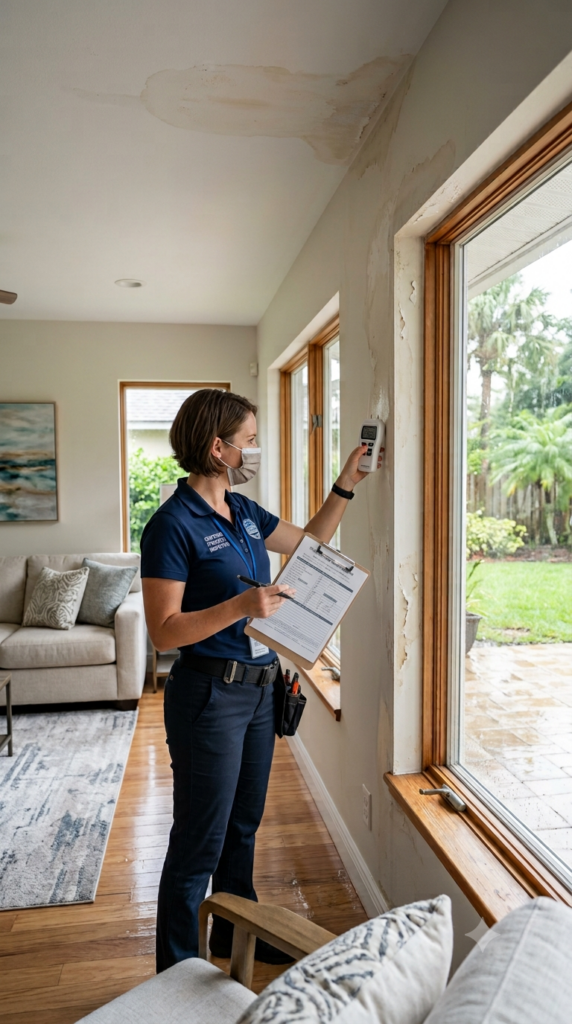
No single issue causes more confusion — and more disputes — in Florida property insurance than the distinction between flood damage and water damage. The difference is not about how much water entered your property or how severe the damage was. It is about where the water came from and how it entered.
Standard Florida homeowner policies cover water damage from covered internal sources — a burst pipe, a roof breach during a storm, an appliance failure. They do not cover flooding from rising external water — storm surge, overflowing rivers or lakes, surface water runoff. That coverage requires a separate flood insurance policy, typically through the National Flood Insurance Program or a private flood carrier.
The problem is that this distinction is frequently applied incorrectly by insurance companies — to their financial advantage. When a hurricane produces both high winds and significant rainfall, insurers routinely reclassify wind-driven rain intrusion as flood damage to invoke the exclusion. When a sewer system backs up during a storm, insurers classify the resulting damage as flood-related rather than covered water damage. When a storm drain overflows onto a property, insurers dispute whether the water came from an external flood source or from a covered storm event.
Wind-Driven Rain vs Flood — Florida's Defining Coverage Dispute
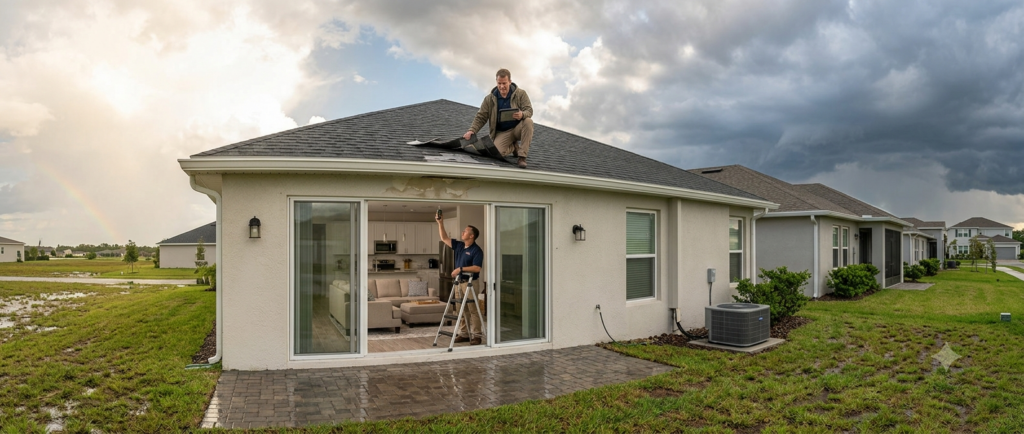
The most commonly litigated water damage coverage dispute in Florida involves the classification of wind-driven rain during storm events. Wind-driven rain that enters a property through a wind-damaged opening — a missing shingle, lifted flashing, broken window, or storm-compromised wall — is wind damage and resulting water damage. It is NOT flood damage from rising external water.
Establishing the mechanism of water entry is the key to overcoming flood misclassification. An independent meteorologist who can document wind speeds at the specific property location, combined with an engineer who can identify the breach point and the mechanism through which water entered, provides the evidence needed to establish that the damage was wind-driven rather than flood-sourced.
We have successfully challenged flood misclassifications in multiple Florida property damage cases using exactly this combination of meteorological and engineering evidence. The insurer’s characterization of how the water entered is not final — it is a factual question that independent experts can answer.
When Flood Insurance and Homeowner Insurance Overlap
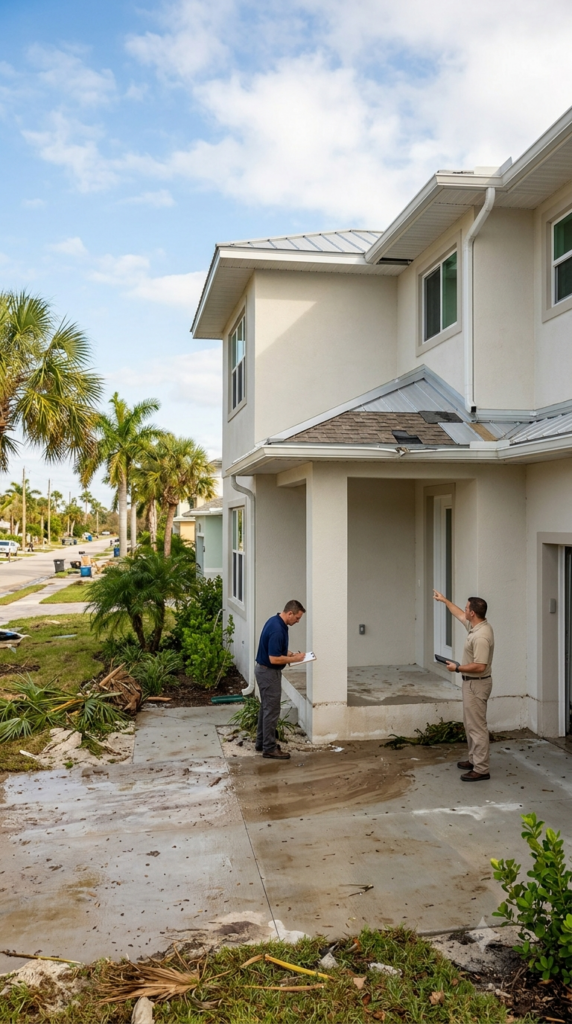
Some Florida property owners carry both homeowner insurance and flood insurance. When damage occurs from a storm event that involves both wind and water, both policies may be triggered — but each insurer may attempt to assign the loss to the other policy. Navigating overlapping coverage requires analysis of both policy documents and the specific facts of how the damage occurred.
We evaluate coverage under both policies simultaneously when both are available, and pursue the combination that delivers the most complete recovery. When one insurer is attempting to shift responsibility to the other, we address both positions directly.
The National Flood Insurance Program — What NFIP Covers and Where It Falls Short
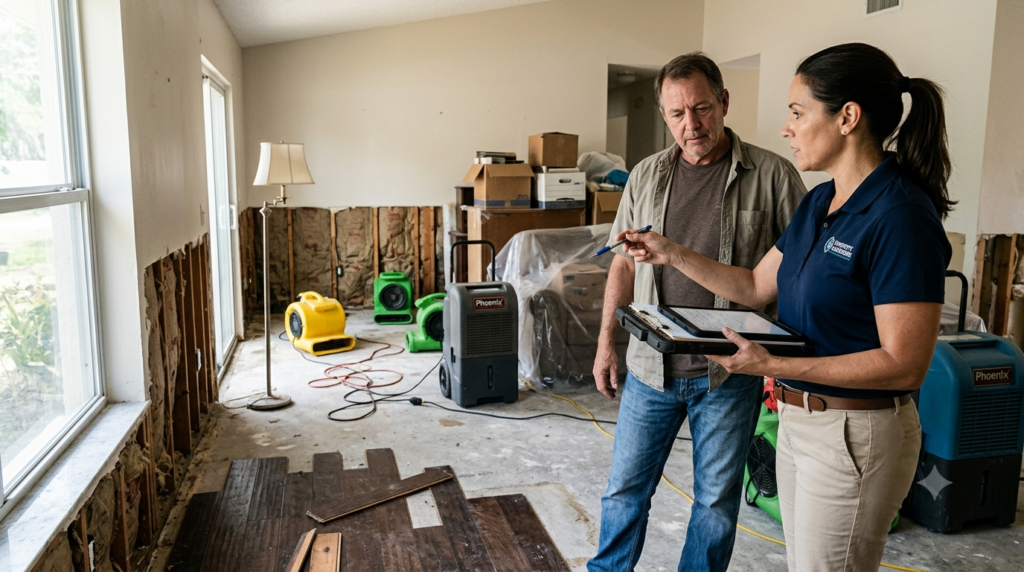
The National Flood Insurance Program provides flood coverage for properties in NFIP-participating communities. NFIP policies have specific coverage limits — $250,000 for the building and $100,000 for contents in residential properties — and they cover only direct physical loss from flooding. Business interruption, loss of use, and consequential damages are not covered under NFIP policies.
When NFIP coverage is inadequate — because of the coverage limits, because the damage was caused by both flood and non-flood perils, or because the NFIP insurer disputes the scope of the loss — additional legal options may be available. We evaluate NFIP claim disputes and advise on what options remain when the NFIP settlement does not cover the full loss.
01
How We Handle Flood Damage Insurance Claims
1st
Coverage & Policy Review
We analyze your policy to determine how flood-related damage is defined and covered
2nd
Cause of Loss Evaluation
We examine how water entered the property and how it should be classified
3rd
Damage Documentation
We gather contractor reports and supporting evidence to reflect full repair costs
4th
Claim Challenge & Resolution
We challenge denials or limitations and pursue proper compensation
02
What Florida Homeowners Need to Know About Flood Damage Claims
Flood damage claims often involve more than just property damage — they involve coverage interpretation. Homeowners may have separate policies or endorsements that affect how claims are handled.
Insurance companies may rely on narrow definitions of flood damage to limit payouts. In some cases, damage caused by storm-related water intrusion may be incorrectly categorized, leading to denied or reduced claims.
Evaluating both the cause of the damage and the applicable coverage is essential when addressing a flood-related claim.

Why Client Choose Us
Why Clients Choose Florida Advocates for Flood Damage Claims
Flood damage claims require a detailed understanding of both policy language and how insurers classify water-related losses.
Florida Advocates brings experience from both sides of the insurance process. Having worked in insurance defense, the firm understands how flood claims are evaluated and where disputes commonly arise.
Each claim is handled with a focus on clarifying coverage, documenting damage, and pursuing the full value of the loss.

Clients Priority

No Win, No Fee

Free Consultation

Thousands of Cases Won
03
How Much Does It Cost to Handle a Flood Damage Claim?
There is no upfront cost to have your claim reviewed. Florida Advocates works on a no win, no fee basis — meaning you only pay if compensation is recovered.
In certain cases, Florida law may require insurers to pay attorney’s fees when claims are resolved after improper denial or underpayment.
Your Flood Damage Claim Is Reviewed by an Experienced Florida Property Attorney

CARLOS D. CABRERA, ESQ.
Lead Property Damage Attorney
24 Years Experience | Former Insurance Defense Counsel | Million Dollar Advocates Forum | Florida Legal Elite | Bilingual (English/Spanish)
Carlos D. Cabrera is Florida Advocates’ lead property damage attorney, bringing 24 years of experience and a rare perspective — he spent years defending insurance companies before switching to represent the policyholders they denied. He has recovered millions of dollars for Florida homeowners, condo owners, and businesses whose insurance claims were denied, delayed, or underpaid. Carlos is a member of the prestigious Million Dollar Advocates Forum, has been recognized by Florida Legal Elite, and is fully bilingual in English and Spanish, allowing him to serve Florida’s diverse communities.
Notable Results:
- $3,000,000 — Condo fire damage recovery
- $1,000,000 — Waterfront restaurant hurricane claim
- $750,000 — Restaurant fire (neighboring property fault)
We Handle Everything
From Flood Damage to Claim Resolution — The Process

Strategy Consultation
We evaluate your claim, identify gaps, and build a clear path to recovery from day one.
Every successful claim starts with a clear strategy. During your free consultation, we review your insurance policy, assess the damage, and identify any gaps or issues in your claim. Whether your case is just starting or already denied, we break down your options and explain exactly how to move forward.
We don’t give vague advice. You’ll get a straightforward evaluation of your claim’s strength, potential value, and the best approach to maximize your recovery. From day one, our goal is to put you in a stronger position against the insurance company.

Gather Evidence
We collect and document every detail to ensure your claim is fully supported and hard to dispute.
We build your claim on facts, not assumptions. Our team collects and organizes all critical evidence, including photos, inspection reports, repair estimates, and policy details. If needed, we work with independent experts to fully document the extent of your property damage.
Insurance companies often rely on incomplete or biased inspections to reduce payouts. We make sure nothing is overlooked—every detail is accounted for and properly supported to strengthen your claim from the ground up.

Send a Demand Letter
We present a clear, evidence-backed demand that pushes the insurance company to respond fairly.
Once your claim is fully documented, we prepare and send a formal demand letter to the insurance company outlining the full extent of your damages and the compensation you are owed under your policy. This isn’t a basic request—it’s a detailed, evidence-backed position that puts pressure on the insurer to respond seriously.
Our demand clearly defines the value of your claim, supported by documentation, expert findings, and policy terms. At this stage, we shift the dynamic—making it clear that your claim is being handled professionally and will not be undervalued or ignored.

File a PropertyDamage Lawsuit
When insurers won’t act fairly, we take legal action to enforce your rights.
If the insurance company refuses to offer a fair settlement, we take the next step—filing a lawsuit to protect your rights and pursue the compensation you’re owed. At this stage, your claim becomes a legal case, and the insurer is required to formally respond.
Filing a lawsuit shows the insurance company you’re serious. It often shifts the balance, forcing them to reevaluate your claim more carefully. We handle the entire legal process, from filing to court representation, while continuing to push for a favorable resolution.

Discovery
We uncover key evidence and hold the insurance company accountable.
During discovery, both sides are required to exchange information and evidence related to the claim. We gather documents from the insurance company, review their internal assessments, and identify any inconsistencies, delays, or unfair practices that may strengthen your case.
This stage is where the pressure builds. By uncovering how the insurer handled your claim, we position your case for stronger negotiations or trial if needed. Our goal is to expose gaps in their process and reinforce the true value of your damages.

Mediation
We negotiate from a position of strength to secure a fair settlement.

Property Damage Trial
We present your case in court to pursue the full compensation you deserve.

Disbursement of Compensation
We finalize your case and ensure your compensation is delivered without delays.
Once your case is successfully resolved—through settlement or trial—the final step is securing and releasing your compensation. We ensure all funds are processed correctly, liens (if any) are handled, and you receive your payout as quickly as possible.
Our team walks you through the final breakdown so everything is clear and transparent. No confusion, no surprises—just the results you fought for, delivered.
SETTLEMENT RESULTS
Real Results for Flood Damage Claims
- Insurance companies make their first offer based on surface-level assessments. Here is what happens when those offers are properly challenged.

Flood-related water damage where insurer misclassified source of water. Full scope proved and settled.
Business interruption from flood-related water damage event. Full recovery obtained.
- Attorney Advertising. Prior results do not guarantee a similar outcome.
Flood Damage Insurance Claims — Frequently Asked Questions

Carlos D. Cabrera, ESQ.
Florida Advocates,
Does my homeowner insurance cover flood damage in Florida?
A denial based on a policy exclusion deserves careful scrutiny. First, the exclusion must actually apply to your specific cause of loss as described in the policy language — not just as the insurer characterizes it. Second, even when a main policy exclusion applies, a policy endorsement may provide coverage that overrides the exclusion. In our $162,000 case, the claim was denied under an exclusion and then fully recovered through a policy endorsement. We review the entire policy — including all endorsements and riders — before accepting any exclusion-based denial.
My water damage claim was denied. Why do insurers deny water damage claims and what can I do?
Insurers typically use your historical financial records — typically the prior year’s net income and the same period’s results — to project what your business would have earned during the closure. Disputes frequently arise over which period to use as the baseline (especially if your business was growing), how to account for seasonal variations, whether to include income from side operations, and what expenses would have been avoided during the closure. We work with forensic accountants to calculate your actual losses accurately and document why the insurer’s calculation understates them.
The storm that flooded my property involved both wind and water. Which policy covers me?
The period of restoration dispute is one of the most common and most valuable issues in business interruption cases. Insurers have every financial incentive to argue it ended as early as possible. The evidence that determines its length includes contractor records documenting actual construction timelines, permit records showing building department approval processes, equipment lead times, and staffing rebuild timelines. We document the actual restoration timeline in detail and challenge unrealistically short restoration period positions with this evidence.
Can I challenge an insurer's classification of my damage as flood rather than wind-driven water?
Yes. Most business interruption policies cover partial closures — not just complete shutdowns. The recovery is the difference between the income your business actually earned during the partial operation and the income it would have earned if fully operational. Insurers sometimes argue that partial operations eliminate the business interruption loss entirely, which is generally not correct under the policy language. We calculate and document the actual income shortfall during partial operations.
How long do I have to file a flood damage or water damage claim in Florida?
Absolutely — and this is one of the most important things to do before accepting any settlement. Business interruption calculations involve complex projections, and the insurer’s initial figure is almost always based on assumptions that minimize your recovery. Before you accept any settlement, have your claim independently reviewed by an attorney and a forensic accountant. We have regularly identified significant underpayments in business interruption offers — recovering multiples of the insurer’s initial position.
What does it cost to pursue a flood or water damage dispute?
Possibly — through ‘civil authority’ coverage, which is an endorsement available in some policies. Civil authority coverage applies when a government order prohibiting access to your business — such as a mandatory evacuation order after a hurricane — forces your closure even if your specific property was not directly damaged. The availability and scope of this coverage depends entirely on your specific policy language. We review your policy for civil authority coverage whenever a government access order contributed to your business closure.
No Fee Unless We Win

We work on a contingency fee basis:
- Free consultation — no cost to speak with us
- No upfront fees — we advance all case costs
- No attorney fees unless we recover for you
- You will never receive a bill from us while your case is active
Florida Advocates Office Locations
Dania Beach (Headquarters)
45 E Sheridan Street, Dania Beach, FL 33004
North Miami
13499 Biscayne Blvd #107, North Miami, FL 33181
Tampa
238 E Davis Blvd #210, Tampa, FL 33606
Phone: 754-263-4252
Hours: Monday – Friday 9:00 AM – 5:00 PM
Available by phone 24/7 for emergencies
Water Damage Lawyers by Location
We represent flood damage clients throughout Florida.
Broward County
- Fort Lauderdale
- Dania Beach
- Hollywood
- Broward County
Miami-Dade County
- Miami
- North Miami
- Miami Beach
- Hialeah
Palm Beach County
- West Palm Beach
- Boca Raton
- Palm Beach County
Tampa Bay Area
- Tampa
- St. Petersburg
- Hillsborough County
Northeast Florida
- Jacksonville
- Duval County
Treasure Coast
- Port St. Lucie
- Fort Pierce
- Martin County
Orlando / Central Florida
- Orlando
- Orange County
- Seminole County
Southwest Florida
- Fort Myers
- Naples
- Cape Coral
- Lee County