
Florida Negligent Contractor Lawyers — When a Contractor's Work Damages Your Property
Protecting Florida property owners when negligent contractor work causes structural damage, water intrusion, construction defects, or other preventable losses.
24+ years of insurance claim litigation experience
Commercial Property Settlement
Condo Damage Settlement

NEGLIGENT CONTRACTOR LAWYER — FLORIDA
Did a Negligent Contractor Leave You With Costly Property Damage?
Contractors have a legal duty to perform their work with reasonable care and in accordance with applicable building standards. When poor workmanship, construction defects, or code violations cause damage to your home or commercial property, you may have legal grounds to pursue compensation from the responsible parties.
Page reviewed and approved by Carlos D. Cabrera, Esq., Florida-licensed property damage attorney with 24 years of contractor negligence and property damage claim experience.
26+ Years Experience
$100M+ Recovered
Former Insurance Defense Attorneys
No Win, No Fee
Free Consultation
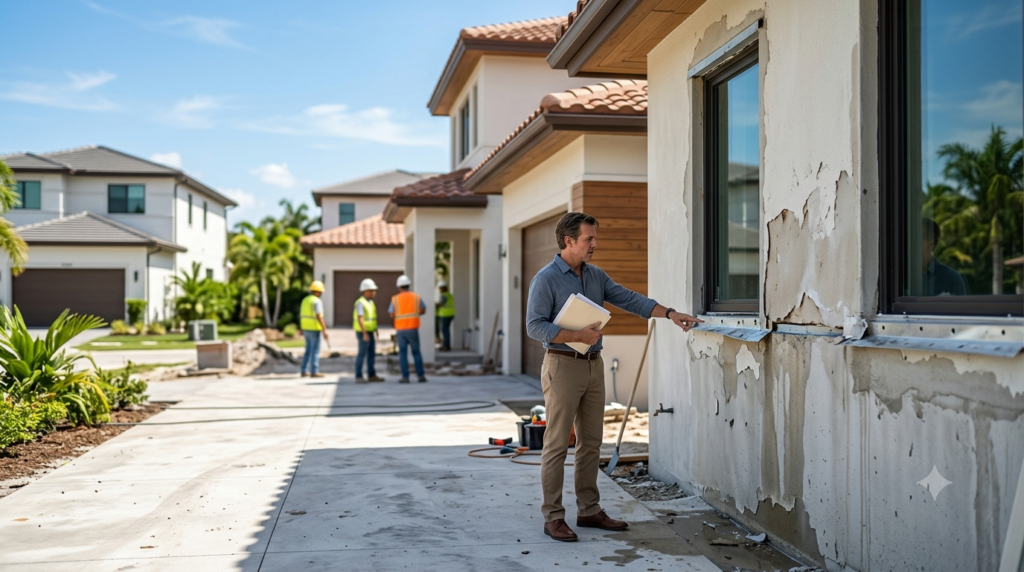
When you hire a contractor to repair, improve, or maintain your home or business, you trust them to do the work correctly. When a contractor’s negligence, careless workmanship, or failure to follow building codes causes damage to your property, you have legal options — against the contractor, their insurer, and in some cases against the party who hired them.
Florida Advocates represents homeowners, condo owners, and business owners throughout Florida who suffered property damage caused by a contractor’s negligence. Whether the contractor was licensed or unlicensed, and whether the damage was caused by a single incident or a pattern of improper work, we know how to build the evidence and pursue the responsible party.
Florida Contractor Negligence Law — What Property Owners Need to Know
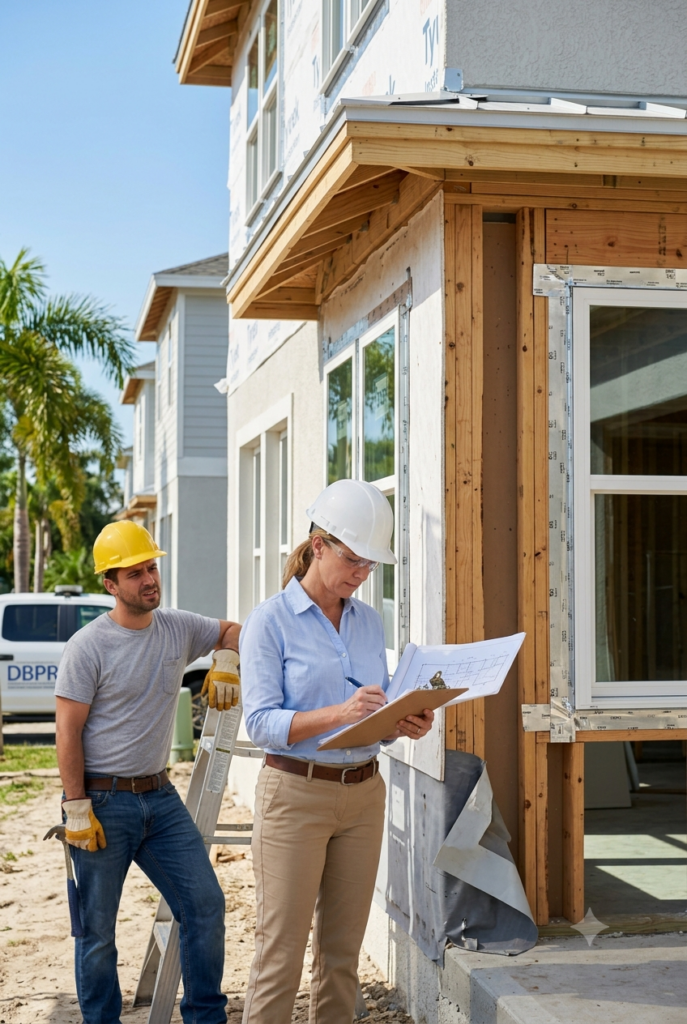
What Constitutes Contractor Negligence in Florida
Contractor negligence occurs when a contractor fails to perform their work with the skill, care, and diligence that a reasonably competent contractor in the same field would exercise under similar circumstances. This is a broad standard — and intentionally so. It covers not just obvious errors but also subtler failures: using materials that meet the letter of a specification but not the spirit, failing to supervise subcontractors adequately, not obtaining required permits, or completing work that technically passes inspection but fails prematurely due to poor workmanship.
Florida Statute 489.128 — Unlicensed Contractors
Florida requires contractors to hold a valid license for most categories of construction work. Under Florida Statute 489.128, a contract with an unlicensed contractor is generally unenforceable by the contractor — meaning they cannot sue you for payment even if the work was completed. More importantly for your damage claim, an unlicensed contractor operating in Florida is violating state law, and that violation is direct evidence of negligence.
Florida Statute Chapter 558 — Pre-Suit Notice for Construction Defects

Florida's 10-Year Statute of Repose

For construction defect claims in Florida, there is an absolute outer limit of 10 years from the date construction was completed — called a statute of repose under Florida Statute 95.11(3)(c). Unlike a statute of limitations, which can be tolled in certain circumstances, the statute of repose is generally absolute. If you have discovered a defect or damage in a building that is more than several years old, contact us immediately. The window may be closing faster than you realise.
Who Can Be Held Responsible for Contractor-Caused Damage
Contractor negligence cases often involve more than one responsible party. We evaluate every link in the chain:
The contractor who performed the defective work is typically the primary defendant. Their general liability insurance is usually the first source of recovery. If they are unlicensed, their personal assets may also be reachable depending on their business structure.
General contractors frequently delegate specific work to subcontractors — a roofer who subs out the flashing work, a plumber who uses a helper for rough-in installation. When the subcontractor’s specific work is defective, they bear direct liability and their insurance responds separately from the general contractor’s.
In condominium and HOA communities, the association frequently hires contractors to perform work on common elements — roofing, pool maintenance, landscaping, plumbing in shared walls. When the association hires a contractor negligently — without verifying licensure, insurance, or qualifications — or fails to supervise the work adequately, the association itself may be liable for the contractor’s resulting damage to unit owners. Several of our case results involve exactly this scenario.
Many licensed Florida contractors are required to carry a surety bond in addition to general liability insurance. The bond provides an additional source of recovery when the contractor’s insurance is inadequate or unavailable. We investigate bonding as a matter of course in all contractor negligence cases.
When defective materials contributed to the damage — a roofing product that fails prematurely, a plumbing fitting that fails at normal pressures — the manufacturer or supplier may bear independent liability under products liability theory. We evaluate this in every contractor case where material failure is a contributing factor.
Contractor's Insurance vs Your Homeowner's Insurance — Understanding Your Recovery Options
A licensed contractor is typically required to carry general liability insurance that covers property damage caused by their work. This is often the primary source of recovery in contractor negligence cases. However, contractors’ insurers defend their policyholders — the contractor — and have every financial incentive to minimize your claim. Having an attorney manage this claim from the outset makes a material difference in the outcome.
Your own homeowner’s policy may cover contractor-caused damage depending on your specific policy language. Filing with your own insurer has the advantage of faster payment — your own insurer has obligations to you that the contractor’s insurer does not. Your insurer then has the right to pursue the contractor’s insurer for reimbursement through subrogation. In many cases, filing with both simultaneously produces the best overall result.
How Florida Advocates Handles Your Contractor Negligence Case
We review your situation at no charge — the contractor’s work, the damage, the available insurance, and the applicable Florida law. We tell you what claims are available and what realistic recovery looks like before you commit to anything.
We act immediately to preserve the evidence before it disappears. Defective work must be documented before repairs cover it. The contractor’s work must be photographed, sampled, and assessed before anything is altered. In Chapter 558 cases, the pre-suit notice and inspection process has strict timing that we manage from day one.
Once your claim is fully documented, we prepare and send a formal demand letter to the insurance company outlining the full extent of your damages and the compensation you are owed under your policy. This isn’t a basic request—it’s a detailed, evidence-backed position that puts pressure on the insurer to respond seriously.
Our demand clearly defines the value of your claim, supported by documentation, expert findings, and policy terms. At this stage, we shift the dynamic—making it clear that your claim is being handled professionally and will not be undervalued or ignored.
Where required, we manage the full Chapter 558 pre-suit notice procedure — drafting the notice, coordinating inspections, and evaluating any repair or settlement offer the contractor makes in response. This process often produces resolution without litigation.
We file and manage all insurance claims simultaneously — contractor’s liability, your homeowner’s policy, and association coverage where applicable. We present the full documented scope of damage and push for settlements that reflect real repair costs, not the contractor’s insurer’s preferred estimate.
When the contractor or their insurer refuses to pay what the damage is worth, we take the case to court. Our preparation — independent engineering reports, documented evidence, Chapter 558 compliance — means we go into litigation ready.
Proven Results: Contractor Negligence Property Damage Cases
COA and Contractor Liability
Commercial Property
Liability proven against both COA and contractor in complex multi-party commercial property dispute.
Negligent Pool Service Contractor
Condo
COA found negligent for hiring unqualified pool maintenance contractor whose improper work caused overflow and flooding.
Condo Flooded During Roof Replacement
Contractor’s improper roof replacement procedure caused flooding. COA held liable for negligently hiring the contractor.
HOA Contractor Negligence
Water and Mold Damage
HOA initially offered $14,000. Engineer documented the full extent of damage caused by contractor’s improper work.
Past results do not guarantee future outcomes. Every case is evaluated on its individual facts.
Florida Contractor Negligence Law — What You Need to Know
Contractor negligence occurs when a contractor fails to perform their work with the skill, care, and diligence that a reasonably competent contractor in the same field would exercise under similar circumstances. This can include improper workmanship, failure to follow building codes, use of incorrect or substandard materials, inadequate supervision of subcontractors, and failure to complete required inspections.
The damage caused by contractor negligence can range from flooding and structural damage from improper roofing or plumbing work to mold contamination resulting from inadequate moisture protection. In many cases, the damage is hidden and progressive — water intrusion from improper flashing may not appear for months after the contractor completes the work.
Florida requires contractors to be licensed for most types of work. Under Florida Statute 489.128, contracts with unlicensed contractors are generally unenforceable by the contractor — meaning they cannot sue you for payment. More importantly, if an unlicensed contractor damages your property, their lack of licensure is evidence of negligence and may affect the legal remedies available to you.
Before filing a lawsuit in Florida for construction defects, property owners are generally required to follow the Florida Statute Chapter 558 pre-suit notice procedure. This involves serving a written notice of claim on the contractor and providing an opportunity to inspect and make an offer to repair. There are strict timing requirements. If you are considering a construction defect or negligent contractor claim, contact us before you take any action — missing the Chapter 558 requirements can significantly affect your rights.
- The contractor directly — for negligent workmanship
- Subcontractors — for their specific portion of the work
- The property association (HOA, COA) — if they hired the contractor and failed in their supervision
- The contractor’s insurance company — for covered property damage
- Surety bonds — many licensed contractors are required to carry bonds
- The manufacturer — if defective materials contributed to the damage
When a contractor damages your property, there are potentially multiple sources of recovery: your homeowner’s insurance, the contractor’s general liability insurance, the contractor’s surety bond, and a direct claim against the contractor. Each has different procedures and limitations. In some cases, your homeowner’s insurer may pay first and then pursue the contractor — called subrogation. In others, the contractor’s liability insurer is the primary source of recovery. We evaluate all available sources and pursue the right combination for your situation.
Common Types of Contractor Negligence We Handle
Roofing errors causing water intrusion and interior flooding
Plumbing work errors causing water damage
Improper window or door installation causing water infiltration
Foundation and structural work errors
HVAC installation mistakes causing water damage or mold
Pool and spa construction or maintenance errors
Electrical work errors — fire risk or code violations
Painting or waterproofing failures causing moisture intrusion
Flooring installation errors causing structural damage
General construction defects causing property damage
Improper roofing installation is one of the most common and most damaging forms of contractor negligence in Florida. Errors in flashing installation, underlayment placement, tile or shingle fastening, and ridge cap application can all create water intrusion points that are invisible until significant interior damage has already occurred. In hurricane-prone Florida, a roofing defect that might cause minor problems elsewhere can cause catastrophic damage when the first major storm arrives.The roof above a condominium building or a common area roof that covers multiple units is a common element — meaning the association is responsible for its maintenance and insurance. When water enters your unit through a failing roof, missing flashing, or inadequate roof drainage, the question is not simply whether your ceiling is wet. The question is whether the water intrusion originated from a common element. If it did, the association’s obligations — and their insurer’s obligations — are triggered.
Associations frequently argue that roof leaks are the result of long-term wear rather than a sudden failure, attempting to reclassify covered damage as a maintenance issue. An independent roofing engineer can document the specific cause and timing of the failure and rebut these arguments.
Improperly installed or connected plumbing — including water supply lines, drain lines, and appliance connections — is a frequent source of sudden and significant water damage. An improperly torqued fitting on a refrigerator water line, an incorrectly sloped drain that allows water to back up, or a supply line connected without proper support can cause tens of thousands of dollars in damage from a single failure.The distinction between “your plumbing” and “the association’s plumbing” is frequently disputed and often misrepresented to unit owners. We review the Declaration and the applicable statute to establish exactly where the association’s responsibility begins and ends.
Improperly installed windows and doors are a particularly common problem in Florida’s coastal environment. When window or door framing is not properly sealed, when flashing is omitted or incorrectly applied, or when the installation does not meet the wind-load requirements of Florida’s building code, water infiltration during normal rainstorms — let alone hurricanes — is virtually inevitable. The resulting damage to walls, flooring, ceilings, and structural framing can be extensive and progressive.
Florida’s high humidity makes HVAC installation errors particularly damaging. An incorrectly sized unit, improperly sloped condensate drain line, or inadequate insulation on refrigerant lines can cause persistent condensation and moisture accumulation inside walls, ceilings, and air handler cabinets — creating ideal conditions for mold growth that may not be discovered for months or years.
Foundation and structural work errors — improper soil compaction, inadequate reinforcement, incorrect concrete mix or curing — can cause progressive structural settlement and cracking that takes years to manifest fully. By the time these defects become visible, the cost of remediation is substantial and the connection to the original contractor’s work requires expert documentation.
Pool and spa installation involves plumbing, electrical, structural, and waterproofing work — all of which must be executed correctly for the system to function without damaging surrounding property. Improper waterproofing, cracked shells, incorrectly installed return lines, and inadequate drainage can all cause significant damage to surrounding structures, landscaping, and in condominium buildings, to units below.
Electrical installation defects create both property damage risk and safety risk. Code violations in electrical work — improper grounding, undersized wiring, inadequate circuit protection — can cause fires, equipment damage, and in worst cases, catastrophic structural damage. Florida requires licensed electricians for most electrical work, and an unlicensed electrical contractor whose work causes damage faces significant liability exposure.
About Attorney Carlos D. Cabrera
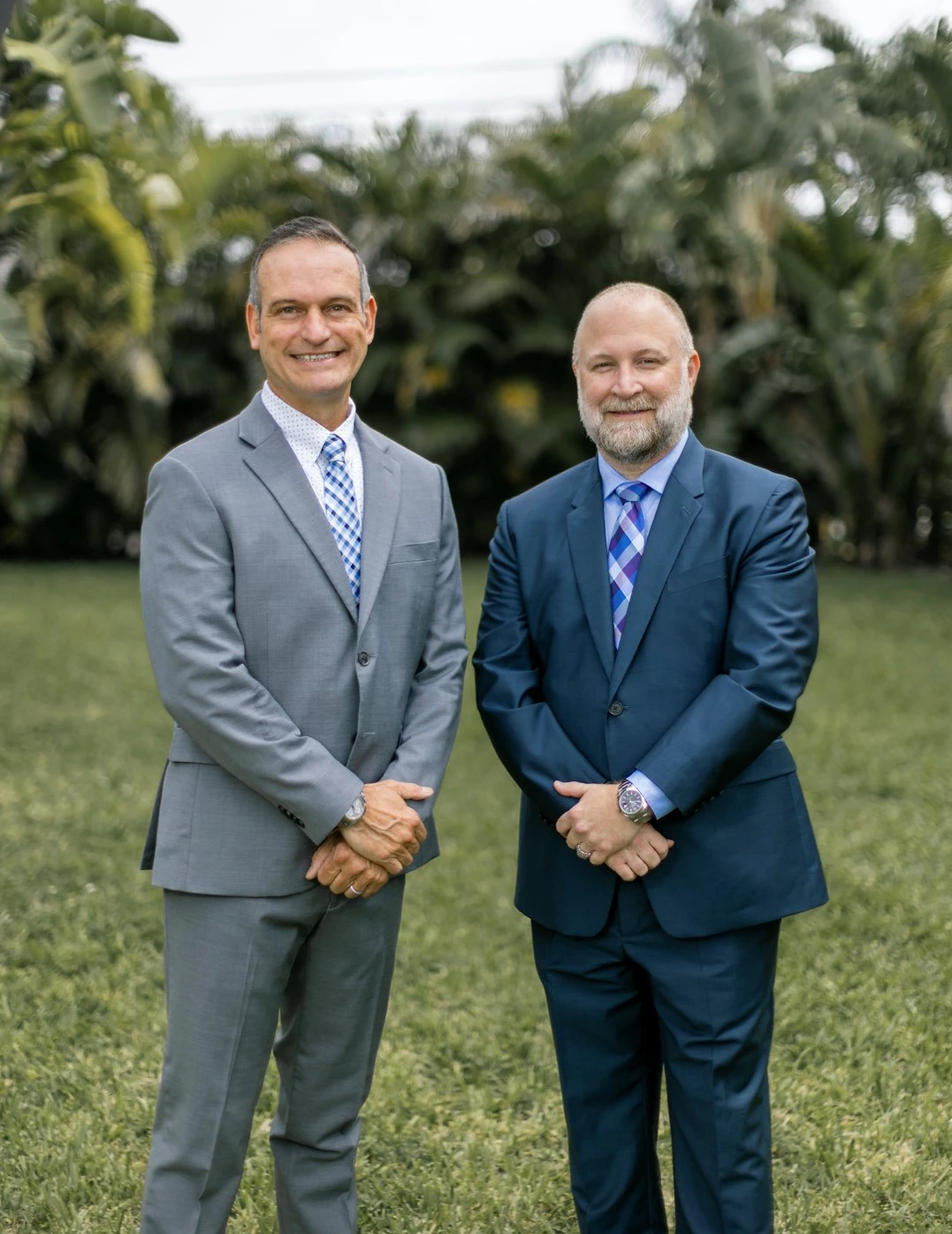
Carlos D. Cabrera, ESQ.
Carlos D. Cabrera oversees the Property Damage Department at Florida Advocates. Before becoming a plaintiff’s attorney, Carlos worked defending insurance companies and gained firsthand knowledge of how insurers evaluate, delay, and undervalue property damage claims. He uses that inside knowledge to build cases that insurance companies take seriously — from initial claim through trial.
Carlos has recovered millions of dollars for Florida homeowners, condo owners, and businesses whose property damage insurance claims were denied, delayed, or underpaid. His background gives clients a distinct advantage: he has sat on the other side of the table, and he knows what insurers are looking for — and what they are hoping you will miss.
Education:
- J.D. — University of Florida College of Law
- Admitted to the Florida Bar
Court Admissions:
- Florida
- U.S. District Court, Southern District of Florida
- U.S. District Court, Middle District of Florida
- U.S. District Court, Northern District of Florida
Awards & Recognition:
- Million Dollar Advocates Forum — Member (reserved for attorneys who have won $1M+ settlements or verdicts)
- Multi-Million Dollar Advocates Forum — Member
- Florida Legal Elite Recognition
- Bilingual — English and Spanish
Professional Memberships:
- Broward County Bar Association
- Florida Bar
What to Do When a Contractor Damages Your Property
CRITICAL
Document everything before any repairs are made. Photographs and video of the damage as it exists are critical evidence. Do not allow the contractor to repair the damage before it has been independently documented.
Do:
- Photograph and video all damage immediately and thoroughly
- Preserve all contracts, invoices, permits, and correspondence with the contractor
- Note when the contractor was last on the property and exactly when the damage appeared
- Obtain an independent engineer or contractor estimate for the cost of proper remediation
- Contact Florida Advocates for a free review before the Chapter 558 pre-suit deadlines pass
Do NOT:
- Do NOT allow the contractor to return to repair the damage without consulting an attorney first
- Do NOT give any recorded statements to the contractor’s insurance company
- Do NOT sign any release or accept any payment without legal review
- Do NOT allow the contractor to return to repair the damage without consulting an attorney first — their repair may destroy evidence and their release may waive your rights
- Do NOT sign any document, release, or repair authorization from the contractor or their insurer without legal review
- Do NOT give a recorded statement to the contractor’s insurance company
- Do NOT make repairs that cover or destroy evidence of the original defect before it is independently documented
- Do NOT contact the contractor to tell them about the damage before speaking with an attorney — how the defect is first reported affects your rights under Chapter 558
- Do NOT assume the contractor’s insurer will treat you fairly — they represent the contractor
Frequently Asked Questions — Florida Negligent Contractor Claims

Carlos D. Cabrera, ESQ.
Florida Advocates,
Can I sue a contractor who damaged my property?
Yes. If a contractor’s negligence, improper workmanship, or code violations caused damage to your property, you have the right to pursue a claim against them, their insurance company, or their surety bond. For construction defect claims, Florida requires following the Chapter 558 pre-suit notice procedure before filing a lawsuit. The claim may run directly against the contractor, against the party who hired them (such as your HOA or COA), or against multiple defendants depending on the circumstances.
The contractor says the damage was pre-existing. What can I do?
A contractor blaming pre-existing conditions is a common defense. An independent licensed contractor or engineer can inspect the property and provide an expert opinion on the cause and timing of the damage — establishing what was pre-existing and what was caused by the contractor’s work. Photographic evidence from before the contractor began work is also valuable. We work with independent experts to build this evidence and directly rebut pre-existing condition defenses.
The contractor was unlicensed. Does that affect my claim?
Yes, favorably. An unlicensed contractor operating in Florida is violating the law. Under Florida Statute 489.128, their contract is generally unenforceable by them — they cannot sue you for unpaid work — and their unlicensed status is evidence of negligence. If you hired the contractor through a platform or referral that represented them as licensed, those parties may also bear responsibility. An unlicensed contractor claim may involve their insurance carrier, your homeowner’s insurer, or a direct judgment against the individual.
My HOA hired the contractor who damaged my unit. Who is responsible?
In many cases, both the contractor and the HOA or COA can be held responsible. If the association hired the contractor, failed to verify their licensure or insurance, or failed to adequately supervise the work, the association may be liable for the resulting damage — even if they did not perform the work themselves. Several of our case results involve exactly this scenario. We evaluate the association’s responsibilities under the Florida Condominium Act (Chapter 718) and Florida HOA Act (Chapter 720).
What is the statute of limitations for a negligent contractor claim in Florida?
The general statute of limitations for negligence claims in Florida is 2 years under HB 837 (2023). For construction defect claims, there is also a 10-year statute of repose under Florida Statute 95.11, which is the absolute outer limit from the date of construction completion. The Chapter 558 pre-suit process has its own notice requirements before a lawsuit can be filed. Acting quickly is important — contact us as soon as you discover the damage.
The contractor has no insurance. Can I still recover?
Possibly. Options include: a direct lawsuit against the contractor personally; a claim through your own homeowner’s insurance if coverage applies; a claim against the party who hired the contractor (HOA, COA, property manager) if they failed to verify insurance; or a surety bond claim if the contractor carried a bond. The viability of these options depends on the specific circumstances. We evaluate all available recovery paths — contact us even if you believe the contractor has no coverage.
How much does it cost to hire Florida Advocates for a contractor negligence case?
Nothing unless we recover for you. Free consultation, no upfront costs, no attorney fees unless we win. We advance all case costs including independent engineering assessments and expert reports. In many contractor negligence cases, the contractor’s insurer or the responsible association’s insurer pays our fees as part of the settlement — meaning our representation may cost you nothing at all.
Damages You Can Pursue

- Cost of proper repair or remediation of all contractor-caused damage
- Cost of undoing improper work and performing it correctly
- Consequential damages — mold remediation, secondary water damage
- Temporary housing costs while your property is uninhabitable
- Loss of property value caused by contractor’s negligence
- Attorney’s fees in appropriate cases
No Fee Unless We Win
We work on a contingency fee basis:
- Free consultation — no cost to speak with us
- No upfront fees — we advance all case costs
- No attorney fees unless we recover for you
- You will never receive a bill from us while your case is active
Florida Advocates Office Locations
Dania Beach (Headquarters)
45 E Sheridan Street, Dania Beach, FL 33004
North Miami
13499 Biscayne Blvd #107, North Miami, FL 33181
Tampa
238 E Davis Blvd #210, Tampa, FL 33606
Phone: 754-263-4252
Hours: Monday – Friday 9:00 AM – 5:00 PM
Available by phone 24/7 for emergencies
Negligent Contractor Lawyers by Location
We represent HOA and COA clients throughout Florida.
Broward County
- Fort Lauderdale
- Dania Beach
- Hollywood
- Broward County
Miami-Dade County
- Miami
- North Miami
- Miami Beach
- Hialeah
Palm Beach County
- West Palm Beach
- Boca Raton
- Palm Beach County
Tampa Bay Area
- Tampa
- St. Petersburg
- Hillsborough County
Northeast Florida
- Jacksonville
- Duval County
Treasure Coast
- Port St. Lucie
- Fort Pierce
- Martin County
Orlando / Central Florida
- Orlando
- Orange County
- Seminole County
Southwest Florida
- Fort Myers
- Naples
- Cape Coral
- Lee County